
Emergency Tree Removal in Springfield, MO (24/7 Rapid Response Service)
Same/Next Day 24/7 emergency tree removal service Springfield, MO, serving Phelps Grove/ University Heights, Rountree (Walnut Street area), Galloway Village, Meador Park, and Downtown Since 2011
15+
Years Experience
24/7
Emergency Service
4.9★
Google Rating
100%
Licensed & Certified
How Fast Can You Get Emergency Tree Removal in Springfield?
A local crew should be on your property within one to two hours of your call. If a company cannot give you a rough arrival window, keep calling. During major storms, response times slow because crews are covering multiple properties across Springfield and south into Nixa and Ozark. Priority goes to trees on structures, power lines, and blocked roads.
Fast Emergency Tree Removal When You Need It Most
Springfield sits in what meteorologists call the Missouri Ozarks storm corridor. Ice storms hit us January through March. Severe thunderstorms roll through April to September. Wind events that top 60 miles per hour are not unusual along the Route 65 corridor or out toward Republic and Willard.
When those storms hit, trees fail. Old oaks along Walnut Street. Silver maples in the Rountree neighborhood. Storm-weakened pines behind homes off Battlefield Road. Trees that looked fine last Tuesday can come down by Saturday morning.
Emergency tree removal in Springfield means same-day or overnight response. It means a crew that shows up with the right equipment, not a pickup truck and a chainsaw. It means the tree comes down in sections so your roof, your fence, and your neighbor’s car stay intact.
Common Tree Emergencies We Handle in Springfield Neighborhoods
Trees Fallen on Houses, Garages, or Fences
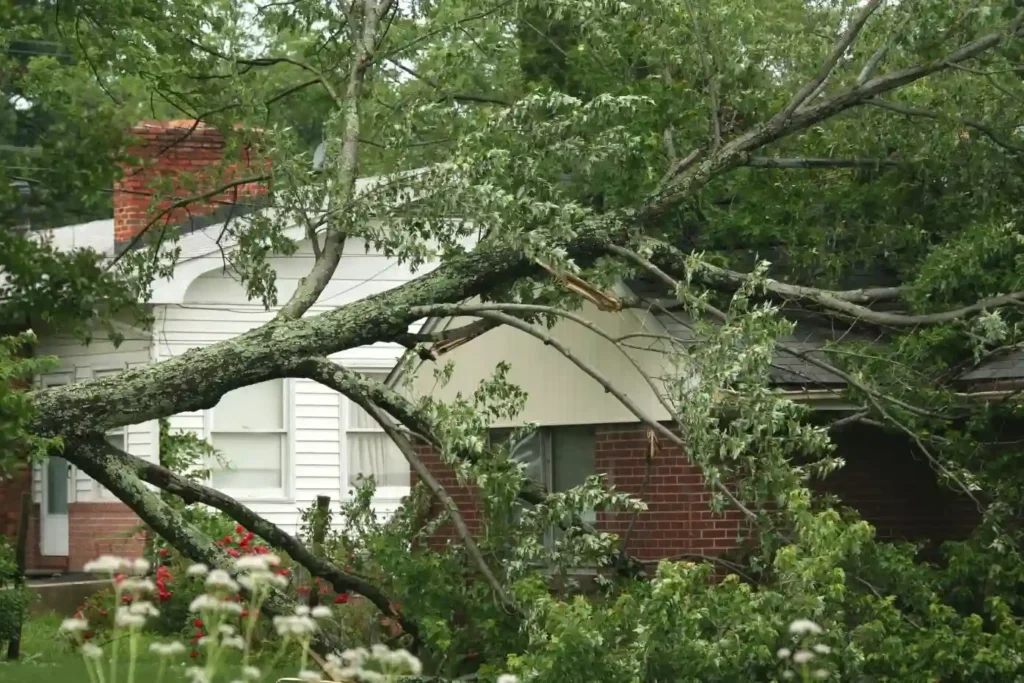
This is the call no homeowner wants to make. If a tree has landed on your home, do not enter the structure until a professional has assessed the load. Roof systems can hold weight at first and fail hours later. A tree crew will section the trunk and remove weight in stages.
Storm-Damaged Trees Blocking Driveways or Roads
A tree across your driveway off East Cherry Street or South National Avenue is more than an inconvenience. If it blocks egress, emergency vehicles cannot reach you. This is a priority job.
Leaning Trees After Heavy Wind or Saturated Soil
Springfield’s clay-heavy soil holds water. After a heavy rain, that clay becomes unstable. A tree that looks straight in dry weather can lean six inches overnight when the ground softens. If a tree has shifted since the last storm, it needs to be looked at today.
Does Leaning Always Mean Immediate Danger?
Not always. A tree leaning more than 15 degrees from vertical, or one that has recently shifted, needs an on-site assessment. Some leaning trees can be cabled and braced. Others need to come down the same day.
Trees or Limbs on Power Lines (High Risk Situations)
Do not touch, do not approach. Call City Utilities first. A trained tree crew can remove the tree once the utility company has addressed the line. Limbs resting on energized lines are lethal and require a specific removal sequence.
Cracked or Splitting Trunks Near Property Structures
A vertical crack in a trunk is not cosmetic. It signals internal failure. Trees with co-dominant stems, meaning two main trunks growing side by side, are especially prone to splitting at the union during wind events. If you see a crack widening after a storm, that tree should come down before the next weather system arrives.
Sudden Limb Drop and Hanging Branch Hazards
Summer limb drop is real. Healthy-looking trees shed large branches with no warning, often on calm summer days. If you see a branch hanging by bark alone after last night’s storm, keep people and pets out of that area. That limb can fall at any time.
Uprooted Trees After Thunderstorms or Ice Storms
An uprooted tree is not stable just because it stopped moving. Root systems can shift and resettle for hours after the initial fall. Never stand under the root ball or walk between the root plate and the trunk hole.
Dead Trees That Could Fall Without Warning
Dead trees are unpredictable. They do not bend in wind. They snap. A dead oak near the older homes in Phelps Grove or along the tree-lined streets of University Heights carries real risk to structures and people. If you have a dead tree on your property, it is not a question of whether it falls. It is a question of when.
Warning Signs a Tree Is About to Fail
Most dangerous tree failures give warning signs before they happen. The problem is many homeowners are not sure what to look for until the damage is already done. Knowing these early signs can help you avoid costly property damage and serious safety risks.
| Warning Sign | Why It’s Dangerous |
|---|---|
| Deep Cracks in the Trunk After Storms | Fresh cracks in the bark or trunk after heavy winds often indicate structural weakness inside the tree. Cracks usually worsen over time and can lead to sudden failure. |
| Sudden Leaning Toward Homes or Driveways | If a tree that was previously straight suddenly begins leaning, the root system may be failing. Leaning trees are one of the most serious indicators of possible collapse. |
| Large Hanging or Partially Broken Branches | Broken limbs hanging overhead are extremely dangerous and can fall without warning. Arborists often call these “widow makers” because of the injury risk they create. |
| Root Exposure or Soil Lifting Around the Base | Soil lifting or exposed roots often means the tree is losing stability underground. Once the root plate starts shifting, complete uprooting can happen quickly during storms. |
| Dead Sections in an Otherwise Healthy Tree | A tree with one side healthy and the other bare or dead is often in structural decline. Dead sections become brittle and are usually the first parts to break. |
| Branches Touching Roofs or Gutters | Constant rubbing against your home weakens branch attachments and can damage roofing, gutters, and siding during windy conditions. |
| Unusual Leaf Drop or Sudden Wilting in Summer | Premature leaf loss, wilting, or thinning can signal disease, root damage, pest infestations, or internal decay affecting the tree’s structural integrity. |
If you notice any of these warning signs, it’s best to have the tree inspected before the problem becomes an emergency. Early action can often prevent major property damage and improve overall safety around your home.
Why Emergency Tree Removal Matters in Springfield’s Weather
What Does Missouri Storm Season Actually Look Like?
The Missouri Climate Center records an average of six to eight major wind events per year in Greene County. Ice storms are documented across the Ozarks every winter. Tornado activity in the Springfield metro area has increased over the past decade.
This is not generic weather language. This is what people in Galloway Village, Southern Hills, and out toward the Brentwood area deal with every single year.
Risk of Property Damage from Mature Trees
The oldest neighborhoods in Springfield, Rountree, Phelps Grove, and sections of South Grand, have tree canopies that are sixty to eighty years old. Those trees are beautiful. They are also large, heavy, and increasingly prone to failure. A single mature oak can weigh twelve thousand pounds. When one falls, it falls with force.
Liability Risks for Homeowners
If a tree on your property falls onto your neighbor’s home, you may be liable, especially if the tree was visibly dead or diseased beforehand. Missouri courts have held property owners responsible when a known hazard was left unaddressed. Removal before failure is cheaper than litigation after it.
Will My Insurance Cover Emergency Tree Removal?
Usually yes, if a storm caused the damage and the tree hit a covered structure. Document everything with photos before the crew arrives. Your insurer will need the date of the storm, photos of the damage, and a written estimate or invoice from the tree service. Keep all of that in one folder.
Why Delaying Removal Increases Cost and Danger
A hanging branch today becomes a full crown failure next week. A cracked trunk in October becomes an ice-loaded collapse in January. The cost of emergency removal after a structure has been damaged is always higher than proactive removal. Every week a hazardous tree stands is a week of compounding risk.
Step-by-Step Emergency Tree Removal Process
Emergency Tree removal is a high-risk work requiring planning, precision, and controlled execution. We follow a proven step-by-step process to ensure safety for your property and surroundings.
Immediate Site Safety Assessment
The crew assesses the fall zone, identifies secondary hazards like power lines, overhead limbs, and unstable lean, and determines the safest removal sequence before a chainsaw starts.
Hazard Containment and Area Protection
Ground protection mats protect your lawn. Barrier tape marks the work zone. If the tree is near a structure, a spotter watches the building during removal.
Controlled Tree Sectional Removal
Large trees are not felled in one cut. They come down in sections from the top. This is called piece work, and it is what separates a professional crew from a landscaper with a saw.
Crane or Rigging for High-Risk Trees
When a tree is over a structure or in a tight space, a crane controls the descent of each section. This prevents the section from swinging into walls, windows, or neighboring properties.
Debris Removal and Cleanup
Logs are cut to manageable lengths. Brush goes through the chipper. Your property is raked and blown clean before the crew leaves.
Final Safety Inspection
The arborist walks the site to check for remaining hazards. Stump condition is assessed. Any nearby trees showing secondary damage are flagged for follow-up.
Professional Equipment on Every Job
We use professional-grade equipment to ensure safe and efficient work:
Bucket trucks for high access
Commercial chainsaws for precision cutting
Rigging systems for controlled lowering
Safety harnesses for elevated work
Stump grinders for complete removal
This equipment allows us to safely handle trees in tight Springfield neighborhoods.
Residential Emergency Tree Removal in Springfield
Most calls come from homeowners in Springfield’s established neighborhoods. Properties along East Sunshine Street, National Avenue, and the older streets south of Battlefield Road tend to have the largest trees and the highest risk. Backyards in Southern Hills with mature pin oaks. Driveways in University Heights blocked by fallen silver maples.
A residential crew works with your property layout. They protect your grass, your garden beds, and your driveway. The job is done right, not just done fast.
Commercial and Property Management Tree Services
Apartment complexes along South Campbell Avenue, retail centers near Glenstone, churches, and institutions all face the same storm risk as residential properties, often with higher liability exposure and more people on the property.
What Should a Property Manager Do After a Storm?
Document the damage with photos before touching anything. Rope off the affected area. Call your insurance carrier and a tree crew the same morning. Do not let tenants or employees near a fallen tree until it has been assessed.
OUR CERTIFICATES



What Our Customers Say About Us
Emergency Tree Removal Cost in Springfield, MO
Emergency tree removal costs in Springfield depend on several factors, including tree size, storm damage severity, accessibility, nearby structures, and whether specialized equipment like cranes or rigging systems are required. Smaller jobs involving open-yard trees usually cost less, while hazardous removals over homes or power lines require more labor, equipment, and safety precautions.
Typical Emergency Tree Removal Costs in Springfield
| Type of Emergency Tree Job | Typical Cost Range |
|---|---|
| Small fallen tree removal | $400–$700 |
| Medium tree blocking driveway | $700–$1,000 |
| Large tree near structure | $1,000–$1,500 |
| Crane-assisted roof removal | $1,500–$4,000+ |
| Emergency limb removal | $300–$800 |
| Storm debris cleanup | $250–$900 |
Several factors affect final pricing:
- Tree height and trunk diameter
- Distance from homes, garages, or power lines
- Emergency night or weekend response
- Crane or advanced rigging requirements
- Amount of debris hauling and cleanup
- Accessibility to the backyard or work area
Most reputable Springfield tree companies provide free written estimates before work begins. If insurance is involved, ask for a detailed invoice and damage report for your claim documentation.
Areas We Serve
Serving every neighborhood in Springfield, MO and surrounding suburbs
Phelps Grove
Rountree
Galloway Village
Phelps Grove
Highland Springs
Call Now for Emergency Tree Removal in Springfield, MO
If a tree is on your house, blocking your driveway, or leaning toward a structure after last night’s storm, every hour you wait increases the risk.
Call now. Tell us the address, describe what you are looking at, and we will give you an honest arrival window. No pressure. No hidden fees. Just fast, clean, local service from a crew that knows Springfield’s streets, its storms, and its trees.