
Tree Removal in Springfield, MO
A dead, leaning, or storm damaged tree can put your home, roof, driveway, or family at risk. Springfield Tree Experts provides careful tree removal for difficult trees, tight spaces, and properties near structures.
We assess the tree, plan the safest removal method, and clean up the debris afterward. If trimming can solve the problem, we will tell you that too.
Need a tree removed? Request an estimate from Springfield Tree Experts today.
15+
Years Experience
24/7
Emergency Service
4.9★
Google Rating
100%
Licensed & Certified
Need a Tree Removed in Springfield?
Homeowners call for removal for many different reasons.
A tree may be dead or badly damaged. A trunk may have started to decay. Large branches may hang over a roof. A tree may lean toward a house after a storm.
Location can also create a problem. A healthy tree can still become difficult when it grows between a house and fence or near a driveway.
Springfield Tree Experts considers the full site before recommending a removal plan. The tree, trunk, branches, canopy, roots, ground conditions, and nearby structures all matter.
Is every damaged tree a removal job?
No. Some trees can remain with proper pruning or other care.
A tree with a few problem branches may only need trimming. A tree with major structural damage may need removal.
The right choice depends on the tree’s condition and the risk around it.
Does Your Tree Actually Need to Be Removed?
Tree removal should solve a real problem. It should not be the automatic answer to every tree concern.
A closer look can help determine whether removal, pruning, or another option makes sense.
When Removal May Be the Safer Option
Removal may make sense when a tree has serious structural problems.
Common warning signs include:
The surrounding property matters too. A damaged tree beside a roof creates different concerns than one standing in an open field.
When Tree Trimming May Be Enough
Some problems do not require complete removal.
A tree may only need pruning when:
City Utilities notes that proper pruning considers tree structure, growth patterns, and mature size. It also warns against topping and rounding over the canopy.
When Should a Tree Be Assessed?
Consider an assessment when you cannot tell whether the tree is safe.
Look for changes in the trunk, roots, bark, branches, or canopy. A sudden lean also deserves attention.
You should take extra care after severe weather. Storm damage can create broken limbs and unstable trees that are not obvious from the ground.
Signs a Tree May Need to Be Removed
A tree rarely becomes a removal concern for just one reason. Several warning signs can appear together.
Visible Decay or Rot
Soft wood, cavities, cracks, or extensive decay can affect trunk strength.
Decay inside a tree may not always be visible. A tree can still have a full canopy while its structure has weakened.
Dead or Unhealthy Foliage
Dead branches and declining foliage can indicate stress.
One dead branch does not automatically mean the whole tree should come down. Widespread decline deserves a closer look.
A Leaning or Shifting Tree
Some trees naturally grow with a lean.
A new or increasing lean is different. Movement around the root area can also raise concern.
A Cracked Trunk or Split Limbs
Large cracks can weaken a trunk or major branch.
Split limbs can also create a falling hazard. The risk increases when the damaged section hangs over a house, driveway, or area people use.
Large Dead or Broken Branches
Large dead limbs can fall during wind or heavy weather.
Branches above roofs, vehicles, sidewalks, and play areas deserve special attention.
Damaged or Exposed Roots
Roots help anchor a tree and supply water and nutrients.
Construction, soil disturbance, erosion, or storm damage can affect the root system. Springfield’s tree guidance also discusses protecting roots and avoiding soil compaction around trees.
Severe Storm Damage
Storms can split trunks, break major limbs, and shift trees.
Do not assume a damaged tree is safe because it has stopped moving. Hidden tension can remain in branches and trunks.
Growing Too Close to Structures
Trees can become difficult when growth reaches a home or other structure.
Branches may extend over a roof. Roots may affect surrounding areas. A large canopy can also make controlled removal harder.
Tree Removal Near Homes, Roofs & Other Structures
Removing a tree beside a house requires more planning than removing one in an open yard.
The crew must consider where branches can move, where trunk sections can land, and how equipment can reach the work area.
Tree Removal Near a House or Roof
A tree beside a roof often cannot be dropped in one piece.
The crew may need to remove branches and trunk sections in a controlled sequence. Ropes and other rigging methods can help manage sections during difficult removals.
Trees Near Fences, Driveways & Garages
A fence can restrict equipment access. A driveway may provide access but leave little room for falling material.
Garages and parked vehicles add another concern.
The removal plan should account for these obstacles before cutting begins.
Trees in Tight or Confined Backyards
A fenced backyard can create a major access challenge.
The crew may have limited room for equipment and very little space for a natural fall.
That can make sectional removal a better approach.
Trees Near Power or Utility Lines
Trees and electrical lines require special care.
City Utilities provides a specific process for trees and limbs involving overhead lines. It also warns homeowners about service lines running from poles to homes.
OSHA treats tree work near energized lines as a serious electrical hazard. Line clearance work has specific training and distance requirements.
If a tree is touching a power line, stay away from it. Contact City Utilities or emergency services when appropriate.
Can a Tree Be Removed From a Tight Backyard?
Yes, but the removal method depends on the site.
A crew may use climbing, rigging, sectional cutting, or specialized equipment. The available access and nearby structures determine the safest approach.
Large, Difficult & Tight-Space Tree Removal
Removing a tree beside a house requires more planning than removing one in an open yard.
The crew must consider where branches can move, where trunk sections can land, and how equipment can reach the work area.
Large Tree Removal
Large branches and trunk sections carry significant weight.
A controlled removal plan helps manage where those sections go. The crew may lower sections instead of allowing them to fall freely.
Difficult Tree Removal
Some trees are difficult because of their location.
Common examples include trees:
Tree Removal in Tight Spaces
Limited space changes the entire job.
The crew must think about access, drop zones, rigging points, equipment placement, and cleanup before cutting.
Crane Assisted Tree Removal
Some large or difficult trees may require a crane.
A crane can move heavy sections when ground access or drop space is limited.
It is not needed for every large tree. The site determines whether this approach makes sense.
Bucket Truck and Specialized Equipment
A bucket truck can provide access to elevated branches when the site allows it.
Other jobs may require climbing equipment, ropes, rigging, chippers, or a crane.
The goal is not to use the most equipment. The goal is to use the right method for the site.
What Is the Safest Way to Remove a Large Tree?
There is no single method for every tree.
A safe plan starts with a site assessment. The crew then considers the tree’s condition, height, lean, branches, nearby structures, utilities, and available work space.
OSHA recommends assessing hazards before tree work begins. Its guidance also highlights falling branches, chainsaws, electrical lines, and other serious hazards.
Tree Removal Near Power Lines
Trees growing near power lines require extra planning. A falling branch can damage electrical equipment or create a serious safety hazard.
Never assume a tree is safe to cut because the line looks far away. Branches can swing, shift, or contact a line during removal.
Tree Branches Touching Power Lines
Do not cut branches that are touching or resting on an electrical line.
Keep people and pets away from the area. Contact the utility provider and follow its instructions before any tree work begins.
OSHA treats tree work near energized power lines as a serious electrical hazard. Specific clearance and training requirements apply to line clearance work.
Trees Growing Beside Utility Lines
A tree does not need to touch a power line to create a problem.
Large branches can extend into the line’s clearance area. Wind can also move branches closer to electrical conductors.
The removal plan should account for:
What If a Storm Drops a Tree Onto a Power Line?
Stay away from the tree and any fallen lines.
Do not touch the tree, branches, fence, vehicle, or other objects that may be energized.
City Utilities provides specific guidance for Springfield customers dealing with trees and limbs around overhead electrical lines.
If there is an immediate electrical or life safety emergency, contact the appropriate emergency service.
Emergency Tree Removal After Storm Damage
Storm damage can change a normal tree problem into an urgent one.
A tree may fall across a driveway. A broken limb may hang over a roof. A split trunk may leave part of the tree unstable.
Springfield properties around areas such as Galloway Village, Phelps Grove, Rountree, and the Battlefield corridor include mature residential trees and limited access areas. The city’s trail and park network also shows how widely tree covered areas extend across Springfield.
When Is a Fallen Tree an Emergency?
Treat the situation as urgent when a tree:
If electrical lines are involved, do not approach the tree.
City Utilities specifically instructs customers to report downed electrical lines and other utility emergencies.
What Should You Do Before the Crew Arrives?
Keep people and pets away from the damaged tree.
Do not cut branches under tension. Do not climb the tree. Do not operate equipment near electrical lines.
OSHA warns that damaged trees can contain hidden tension and other hazards after severe weather.
If you can do so safely, take photos from a distance. They can help explain the situation before the site visit.
How Our Tree Removal Process Works
A good removal starts before the chainsaw starts.
Assess the Tree and Work Area
We look at the tree’s condition and its surroundings.
That includes the trunk, branches, canopy, height, lean, access, ground conditions, and nearby structures.
Plan the Removal
The removal method depends on the site.
An open yard may allow a different approach from a tree beside a house or fence.
Remove the Tree in Controlled Sections
Large or difficult trees may need sectional removal.
Branches and trunk sections can be lowered in a controlled manner when a direct drop is not suitable.
Process the Tree and Remove Debris
Branches can be chipped or hauled away.
Larger wood can be cut into manageable sections. Disposal options should be discussed before work begins.
Clean the Work Area
The final step is clearing the work area.
That may include branches, chips, smaller wood, and other debris created during removal.
How Do You Remove a Tree Without Damaging the Property?
The removal plan should account for everything around the tree.
That includes roofs, fences, landscaping, driveways, vehicles, utility lines, and nearby structures.
Controlled cutting and lowering can reduce the chance of uncontrolled impacts.
The work area also needs a clear drop zone. OSHA recommends identifying hazards, obstacles, electrical lines, and retreat paths before chainsaw work begins.
How We Protect Your Property During Tree Removal?
Your house is not separate from the removal plan.
Its location affects how the tree should come down.
The same applies to fences, garages, sheds, landscaping, driveways, and vehicles.
A large tree beside a home may need a slower removal sequence. A tree in an open yard may allow more room.
We plan around the property rather than treating every tree the same way.
What Happens to the Tree After Removal?
Removing the tree is only part of the job.
The remaining wood and debris also need a plan.
Branches and Brush
Smaller branches can be processed for easier removal.
Large amounts of brush can take up considerable space if left on the property.
Logs and Wood
Larger trunk sections can be cut into manageable pieces.
Some homeowners may want usable wood left on site. Others may prefer complete hauling.
Stump Options
Tree removal does not always include stump removal.
The remaining stump can often be ground below the surface with separate equipment.
Cleanup and Hauling
Cleanup depends on the service requested.
Ask what the estimate includes before work begins. This avoids confusion about branches, logs, chips, and stump work.
Does Tree Removal Include Stump Removal?
Not always.
Tree removal usually focuses on removing the above ground portion of the tree.
Stump grinding is a separate service in many cases. It removes the remaining stump below the surrounding surface.
How Much Does It Cost to Remove a Tree in Springfield, MO?
There is no useful flat price for every tree. In Springfield, tree removal commonly ranges from about $150 to $5,000 or more, depending on the job. Small trees may fall near the lower end, while very large or complex removals can cost much more.
Two trees with the same height can require very different work.
The biggest cost factors usually involve the tree, its location, access, removal method, and cleanup. A small tree in an open yard may require little equipment, while a large tree beside a roof can require a controlled removal plan.
The honest answer depends on the tree and the property. Size alone does not provide enough information for a useful estimate.
For a more detailed breakdown, see our Springfield tree removal cost guide.
Tree Size and Height
A taller tree usually requires more planning and equipment.
Trunk diameter and branch weight also matter.
Location and Accessibility
An open backyard can be easier to access than a fenced yard.
A tree behind a house may require a different removal plan from one beside a driveway.
Tree Condition
Dead, rotten, split, or storm damaged trees can create additional hazards.
Their wood may also behave differently during cutting.
Nearby Structures and Utility Lines
A roof, fence, garage, vehicle, or utility line can limit where sections can fall.
This can change the removal method and equipment needs.
Equipment and Removal Method
Some trees can be removed with basic climbing and cutting methods.
Others may require rigging, a bucket truck, or crane support.
Cleanup and Hauling
Debris removal affects the total job.
Ask whether the estimate includes branch cleanup, wood hauling, and other disposal needs.
Average Tree Removal Costs in Springfield, MO by Size
| Tree Size | Typical Height | Springfield Price Range |
|---|---|---|
| Small | Under 30 ft | $200–$500 |
| Medium | 30–60 ft | $500–$1,200 |
| Large | 60–80 ft | $1,200–$2,500 |
| Very Large / Complex | 80+ ft | $2,500–$5,000+ |
These ranges align closely with a current Springfield specific 2026 pricing guide, which reports $150–$500 for small trees, $500–$1,200 for medium trees, $1,200–$2,500 for large trees, and $2,500–$5,000+ for very large or complex removals.
Why Choose Springfield Tree Experts?
Choosing a tree company should involve more than comparing a single number.
Ask how the company plans to handle your specific tree.
Clear Recommendations
You should understand why removal is recommended.
If pruning may solve the problem, that should be part of the conversation.
Property Focused Planning
The plan should consider the house, yard, access, structures, and utilities.
Straightforward Estimates
You should know what the quoted work includes.
Ask about cleanup, hauling, and stump work before approving the job.
Appropriate Equipment
Different trees require different methods.
The right equipment depends on access, height, condition, and surrounding hazards.
Cleanup After Removal
Tree work creates branches and wood.
A clear cleanup plan helps you know what your yard will look like after the work.
What Should You Look for in a Tree Removal Company?
Look for a company that explains the removal plan clearly.
Ask about insurance, crew qualifications, equipment, cleanup, and the estimate.
You should also ask how the company handles trees near structures and utility lines.
A low quote does not tell you how the work will be performed.
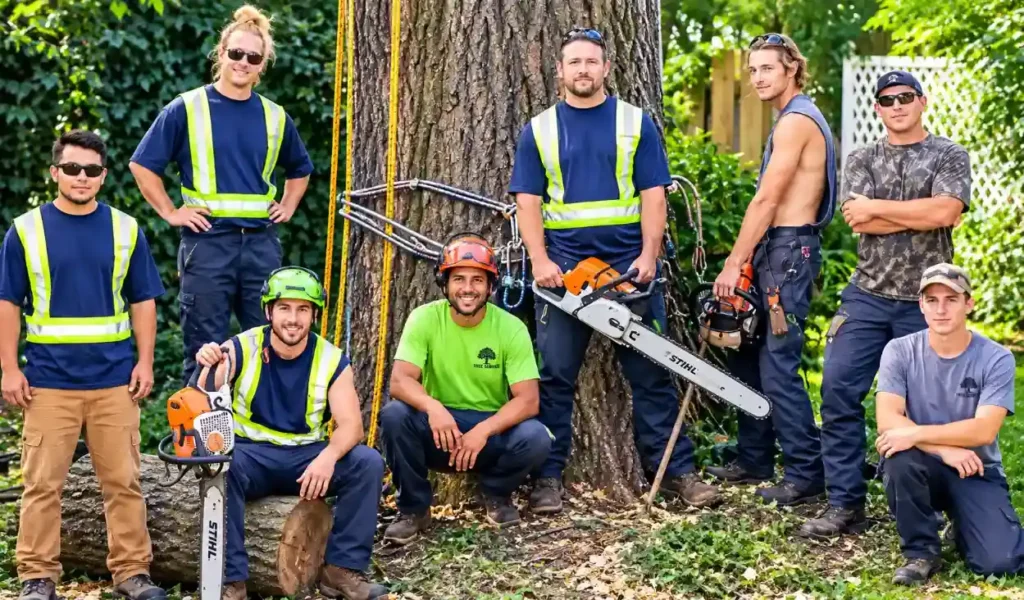
Meet the Team at Springfield Tree Experts
At Springfield Tree Experts, we understand that tree work is about more than cutting branches. Every property has different challenges, from mature trees near homes to storm damaged limbs blocking driveways. Our approach starts by looking at the tree, its structure, surrounding property, and access. We explain what we find in straightforward terms, so you can understand whether trimming, removal, stump grinding, or another solution makes sense for your property.
Our team focuses on careful tree work and respect for your property from the first assessment through cleanup. We consider nearby roofs, fences, landscaping, driveways, utility lines, and other potential hazards before work begins. Whether you need routine tree trimming or help after a severe storm, Springfield Tree Experts aims to make the process clear and manageable.
Our goal is simple: safe work, honest communication, and a clean property when the job is finished.
What Makes Our Approach Different?
We do not treat every tree as the same job.
A mature oak beside a roof needs a different plan from a small dead tree in an open yard.
A storm damaged tree near a power line needs extra caution.
A tree behind a narrow fence may need controlled removal.
Our focus is simple:
Understand the tree. Understand the property. Plan the work. Then remove it.
Springfield Tree Removal Projects
Real projects can show more than generic claims.
A useful project story should explain the actual problem and the solution.
Large Tree Near a Springfield Home
A mature tree close to a roof may leave little room for a direct drop.
The removal plan should account for the canopy, trunk, branches, roof, and available access.
Storm Damaged Tree
Storm damage can leave broken branches and unstable sections.
The first priority is keeping people away from the hazard. The removal plan comes after the site is assessed.
Tree in a Confined Backyard
A fenced backyard can restrict equipment and drop zones.
Sectional removal may allow the crew to control each part of the tree.
Before & After Tree Removal in Springfield: Real Storm Damage, Real Results
Springfield storms can leave trees split, leaning, or scattered across a property. In one recent project, a storm damaged a mature tree near a residential structure. Broken branches covered the yard, while the damaged trunk created a safety concern. Our crew assessed the tree, planned a controlled removal, cleared the wood and branches, and cleaned the affected area. The before and after photos show the difference clearly. From storm damage to a clean, usable yard, the goal is simple: safe work and a property left in better condition.


Areas We Serve
Springfield Tree Experts serves property owners throughout Springfield and nearby communities.
Within Springfield, service demand can span areas around:
Springfield’s official trail network includes several of these roads and surrounding areas, including Sunshine Street, Glenstone Avenue, Battlefield Road, Republic Road, National Avenue, and Campbell Avenue.
Service availability can vary by job type and location.
For properties outside Springfield, ask about availability before scheduling.
What Our Customers Say About Us
Got Questions?
We’re here to help. If you can’t find the information you need, reach out anytime—our team is ready to assist with fast, reliable solutions.
Call us +1 (417) 460-9396
Request a Tree Removal Estimate in Springfield, MO
Not sure what to do with a damaged, dead, leaning, or unwanted tree?
Springfield Tree Experts can help you understand the situation before work begins.
Tell us where the tree is located and what concerns you have.
Photos can also help explain the problem before an on site visit.
Whether the tree stands near a house on a quiet residential street or along a busy Springfield corridor, the removal plan should fit the property.